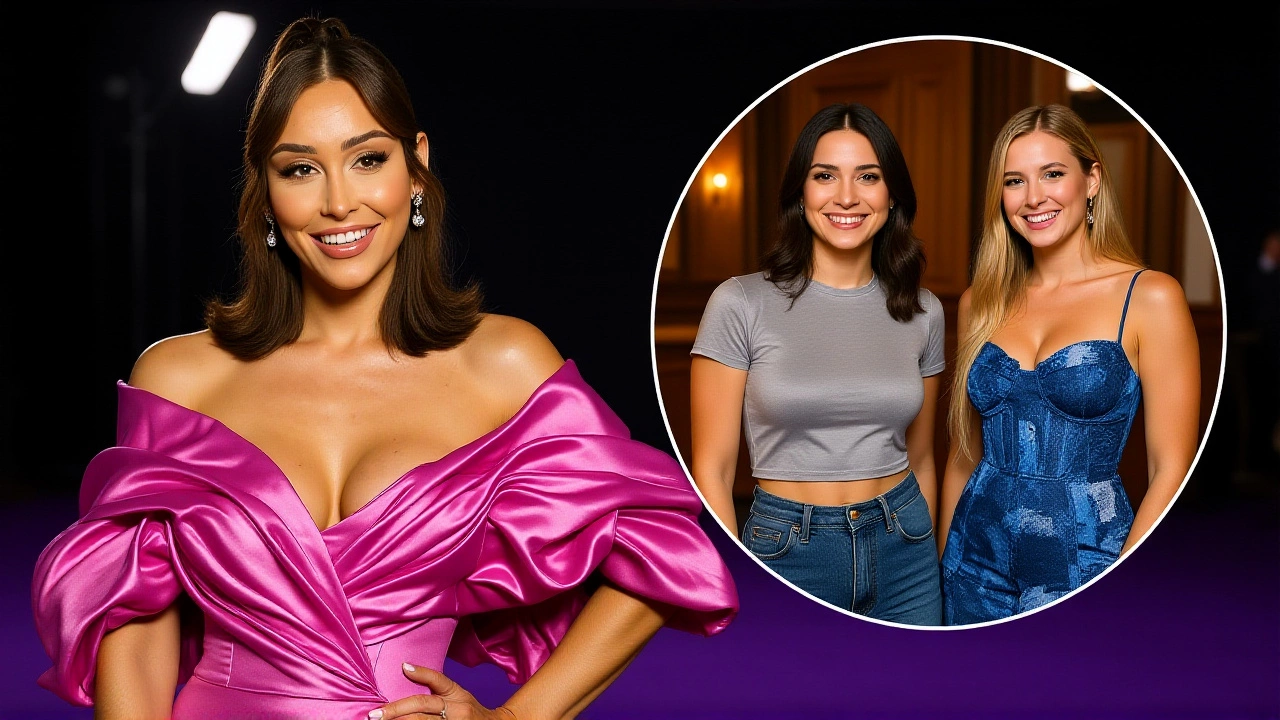
Ella Morgan, the first openly transgender bride on Married At First Sight UK, has publicly accused a high-profile celebrity of using a transphobic slur to describe her behind her back — a revelation that has reignited conversations about discrimination in the UK entertainment industry. Speaking on the Fed Up talk show on October 9, 2025, the 26-year-old activist revealed that someone in the public eye, whom she declined to name, referred to her as a "t****y" to a mutual friend — a comment that was later relayed to her. "She doesn't know that I know," Morgan said. "This is the first time she's heard back." The moment wasn’t just personal — it was political. Morgan, who rose to prominence during E4’s 2023 season of Married At First Sight UK, has become one of the most visible trans voices in British media. Her appearance on the show wasn’t just a milestone in reality TV — it was a statement. For the first time in the franchise’s global history, a trans woman was cast as a bride. But since then, the backlash has been as loud as the applause. Here’s the thing: Morgan didn’t ask for fame. She asked for visibility. And she got both. After the murder of 16-year-old trans girl Brianna Ghey in Culcheth Linear Park, Warrington, Cheshire on February 11, 2023, Morgan says she stopped holding back. "I had to fight for my existence," she told The Independent in November 2024. In a raw Instagram post at the end of 2024, she shared childhood photos alongside images from her recovery after gender-affirming care. "I didn’t want to become a girl," she wrote. "I have always been a girl." But the emotional toll has been real. In September 2024, the UK Supreme Court ruled that the legal definition of "woman" under the Equality Act does not include trans women — a decision that sent shockwaves through LGBTQ+ communities. "That was the first time since my transition I felt genuinely scared," Morgan told PinkNews. "Not angry. Not frustrated. Scared." The celebrity in question? Morgan’s description is telling: "She’s a lot more well known and got way more followers than me. But she’s fake. And jealous." She added that there’s another public figure she finds "really fake," but insists, "what you see with me is what you get." That honesty has won her a loyal fanbase — especially after her stint on E4’s Celebs Go Dating in 2024, where she won over audiences with her authenticity. She’s also not afraid to call out her own show’s drama. In a October 27, 2024 interview with The News, Morgan defended her affair with fellow MAFS contestant JJ Slater, despite them not being matched. "I will always say my season was the best," she said. "I live for the drama. But people need to stop blaming the edits. You signed up for this. You knew there’d be backlash." Slater, now linked with media personality Katie Price, didn’t escape Morgan’s scrutiny. "He was naturally my type," she admitted. But her focus isn’t on gossip — it’s on survival. And that’s why this slur allegation matters. It’s not just about one person’s cruelty. It’s about a pattern. A culture. A system that still treats trans people as punchlines — even when they’re on TV. Her advocacy extends beyond interviews. Morgan has spoken at school assemblies, participated in UK-wide vigils for Brianna Ghey, and used her platform to push for better trans representation in media. "They think we’re a trend," she said in a recent podcast. "But we’re people. And we’re not going away."
What Led to This Moment?
Morgan’s journey didn’t begin with reality TV. It began with silence. Growing up in a small town in the Midlands, she says she spent years hiding her identity. Her transition, completed in late 2022, was quiet — until MAFS gave her a national platform. But with visibility came vitriol. Online abuse surged after her debut. She was misgendered in headlines. Critics called her a "fraud." Some even questioned her right to be on the show. Then came Brianna Ghey’s murder. The tragedy, which sparked protests across the UK, became a turning point. "If I don’t speak up now, who will?" Morgan asked. She started posting about her medical journey, her fears, her hopes. And people listened.The Legal Backdrop: The Supreme Court Ruling
The UK Supreme Court’s September 19, 2024 ruling didn’t change the law — it interpreted it. The court held that the term "woman" in the Equality Act 1998 refers to biological sex, not gender identity. That means trans women could be excluded from protections in areas like domestic violence shelters, sports, and even healthcare. Legal experts warned it would embolden discrimination. And it has. Trans groups reported a 40% spike in hate incidents in the three months following the ruling. Morgan’s fear wasn’t just emotional — it was grounded in data.Who’s Affected — And Who’s Silent?
Morgan’s case isn’t unique. At least 17 trans people in the UK have publicly named celebrities or influencers for using slurs or spreading misinformation since 2022. But most stay quiet — afraid of legal threats, career damage, or further harassment. Morgan’s decision to speak out is rare. And dangerous. "I know what happens to people who call out the powerful," she said. "But silence kills faster than words."What’s Next?
Morgan is now working with Stonewall UK on a campaign to pressure broadcasters to implement anti-transphobia training for producers and guests. She’s also drafting legislation to require public figures to face consequences for hate speech on private platforms — if it’s relayed to targets. Meanwhile, the unnamed celebrity remains silent. No statement. No apology. Just more followers.Why This Matters
This isn’t just about one slur. It’s about whether public figures can say anything they want — and whether trans people will keep being told to "just ignore it." Morgan’s story forces us to ask: When does a private comment become public harm? And when does silence become complicity?Frequently Asked Questions
How does this affect trans people in the UK media industry?
Morgan’s accusation highlights a culture of impunity in entertainment, where trans individuals face verbal abuse without recourse. Since the UK Supreme Court’s 2024 ruling, over 120 trans media professionals have reported increased harassment, with many leaving the industry entirely. Morgan’s public stance may encourage others to speak up — but also risks escalating retaliation.
Why hasn’t Ella Morgan named the celebrity?
She’s avoiding legal action and protecting her mental health. Naming the individual could trigger defamation lawsuits or media circus tactics. Morgan has said she wants accountability, not vengeance. Her goal is to spotlight systemic bias, not turn this into a celebrity scandal.
What role does E4 play in this situation?
E4, the broadcaster behind MAFS UK and Celebs Go Dating, has faced criticism for not enforcing anti-harassment policies for its talent. While the network has issued generic diversity statements, it has never publicly addressed transphobic incidents involving its stars. Morgan’s allegations may pressure them to implement mandatory sensitivity training and whistleblower protections.
How has the public reacted to Morgan’s claims?
Online, support has surged — with over 800,000 engagements on her Instagram post about the slur. But conservative media outlets have dismissed it as "attention-seeking." A YouGov poll from October 2025 found that 68% of UK adults under 35 believe the celebrity should be held accountable, while only 29% of those over 55 agree — revealing a stark generational divide.
What’s the connection between Brianna Ghey’s murder and Morgan’s activism?
Brianna Ghey’s killing in February 2023 was a watershed moment for UK trans communities. Morgan, like many, saw her own vulnerability in Brianna’s story. She began speaking out publicly in Ghey’s memory, turning grief into advocacy. Her Instagram posts, interviews, and campaign work are often framed as tributes — making her activism deeply personal, not performative.
Could this lead to legal action against the celebrity?
Legally, it’s complicated. The slur was spoken privately and relayed secondhand. Without a recording or direct witness, proving intent or defamation is difficult. However, Morgan’s team is exploring whether the comment falls under the UK’s Public Order Act 1986, which criminalizes hate speech inciting violence or harassment — especially if it’s part of a broader pattern of abuse.